


Table of contents
If you’re scrolling through a product page and spot a PDF link labeled “COA,” “Lab Report,” or “Certificate of Analysis,” that’s a good sign to start with. But do you actually know what you’re looking at? Most people click, see a table full of abbreviations, and close the document right away. But there’s a lot in there—if you know what matters.
What is a COA, anyway?
COA stands for Certificate of Analysis. It’s a document issued by an independent lab that certifies the exact chemical composition of a product. For cannabinoid-Vapes, it shows you, among other things, how much active ingredient is really inside, which secondary compounds are present, and whether the product contains certain contaminants.
Important: A COA from the manufacturer is not a real COA. Only reports from independent third-party labs have real evidential value. Trustworthy shops like HHC VAPES only publish lab reports created externally.
Why should you check as a buyer?
Honestly: Because otherwise you have no idea what you’re buying. The cannabinoid market has grown quickly—and not all suppliers are equally careful. A missing or outdated lab report is one of the clearest warning signs. If a shop doesn’t provide a COA or you can’t find one, you should be skeptical.
On the other hand: Having a COA doesn’t automatically make a product perfect—but it gives you the chance to check for yourself. And that’s exactly what we want to show you here.
The most important sections in the COA—and what they mean
1. Cannabinoid Profile (Potency Panel)
This is the part most people look for first—and rightly so. Here you’ll see which cannabinoids are present and in what concentration. For a HHZ Vape, for example, it might say:
- HHZ (Hexahydro-CBZ): 94.7%—this is the main active ingredient
- CBD: 0.8%—a harmless accompanying substance
- CBN, CBG, CBC: small amounts—natural byproducts of the distillation process
- THC: for legal products, should be below 0.2% (or depending on the country, below 0.3%)
What many don’t know: A distillate with 95% HHZ doesn’t mean that 95% of the Vapes is this active ingredient. The distillate might make up, for example, 90% of the total product, with the rest being terpenes and carriers. The percentage always refers to the material tested—often the distillate, not the final product. This is usually stated at the top of the report under “Sample Description.”
2. THC Content—why it’s so important
For a product’s legality in Germany, the Delta-9-THC content is crucial. If it’s below 0.2% in the final product, it’s generally legal to sell. The COA shows whether this value is met.
Some reports list different forms of THC—Delta-8-THC, Delta-9-THC, THCA, THCP. For the legal situation in Germany, Delta-9-THC is what matters. THCA can convert into Delta-9-THC when heated—this is called “decarboxylation.” That’s why reputable labs sometimes show both values: the raw THCA value and the “total THC” value after decarboxylation. Pay attention to the latter.
3. Contaminants: Pesticides, Heavy Metals, Solvents
A complete COA doesn’t just contain the cannabinoid profile, but also so-called Safety Panels. Specifically:
- Pesticides: Were plant protection agents used during cultivation, and are residues detectable in the product?
- Heavy metals: Lead, arsenic, cadmium, mercury—hemp accumulates heavy metals from the soil. The distillate should be free of these.
- Residual solvents: Sometimes solvents (like ethanol, hexane) are used during extraction. A good final product contains no measurable residues.
- Mycotoxins/Microbiology: Fungi and bacteria—mainly relevant for Flowers and hash, less so for distillates.
The result is usually listed as “Pass” or “Fail”—or as a specific measured value with a limit. Anything marked “ND” (Not Detected) or “<LOQ” (below limit of quantification) is clean.
4. Terpene Profile
Not every COA includes this section, but a good report also lists the terpenes—the aromatic compounds that give the product its taste and smell. This is especially relevant if you want to understand why two Vapes with different varieties can “feel” so different. Terpenes influence not just the taste, but the overall character of the experience.
Typical terpenes in HHZ Vapes: myrcene, limonene, caryophyllene, linalool, pinene. If the COA shows a specific terpene profile, you know the aroma isn’t from synthetic flavors, but of botanical origin—a clear mark of quality.
How to read a COA properly—step by step
Step 1—Check the issuer: Who issued the lab report? Is it a well-known, accredited lab (for example, ISO 17025)? In Germany and the EU, there are several certified labs. Unknown or non-accredited labs should at least be searchable online.
Step 2—Check the date: Is the report up to date? A COA from 2022 for a product you’re buying today says nothing about the current batch. Trustworthy shops update COAs regularly—or label the batch number the document refers to.
Step 3—Identify the sample: At the top of the report, it usually says which sample was tested. Was it the raw distillate or the final product? That makes a difference. A distillate with 95% HHZ that’s then diluted with terpenes to 90% ends up as a final product at around 85–90%—not 95%.
Step 4—Check the THC value: Delta-9-THC under 0.2% in the final product? If so, the product is generally fine for Germany. If the report only tests the distillate, the shop should be transparent about how much distillate is in the final product.
Step 5—Check the safety panel: Are there screenings for pesticides, heavy metals, and solvents? If not, the document is incomplete. “Pass” everywhere is the goal.
Warning signs: COA issues you should know about
There are COAs—and then there are COAs. Not every report that g
- No date or outdated date: A report without an issue date is worthless. Older reports don't say anything about current batches.
- No safety panel: Only a cannabinoid profile, but no pesticide or heavy metal analysis – that's not a complete COA.
- Unknown lab without accreditation: Some providers have products tested at friendly labs that aren't independent.
- Batch number missing: Without a batch number, you can't check if the report matches the batch you're buying.
- QR code doesn't work: Many labs provide their reports with verifiable QR codes. If the code leads nowhere, something's off.
COA and product quality at HHZ Vapes
At HHZ Vapes, high-quality distillates are now standard – with active ingredient contents of 90–98%. The COA shows you whether these figures match reality. A product advertised as “95% HHZ” but only showing 80% in the COA is simply mislabeled.
Especially with newer cannabinoids like 10-OH-HHC or blends of several active ingredients (like the Superior Blend Vapes), the COA becomes even more important – because here you want to know how the individual components are measured and whether the ratios match the product promise.
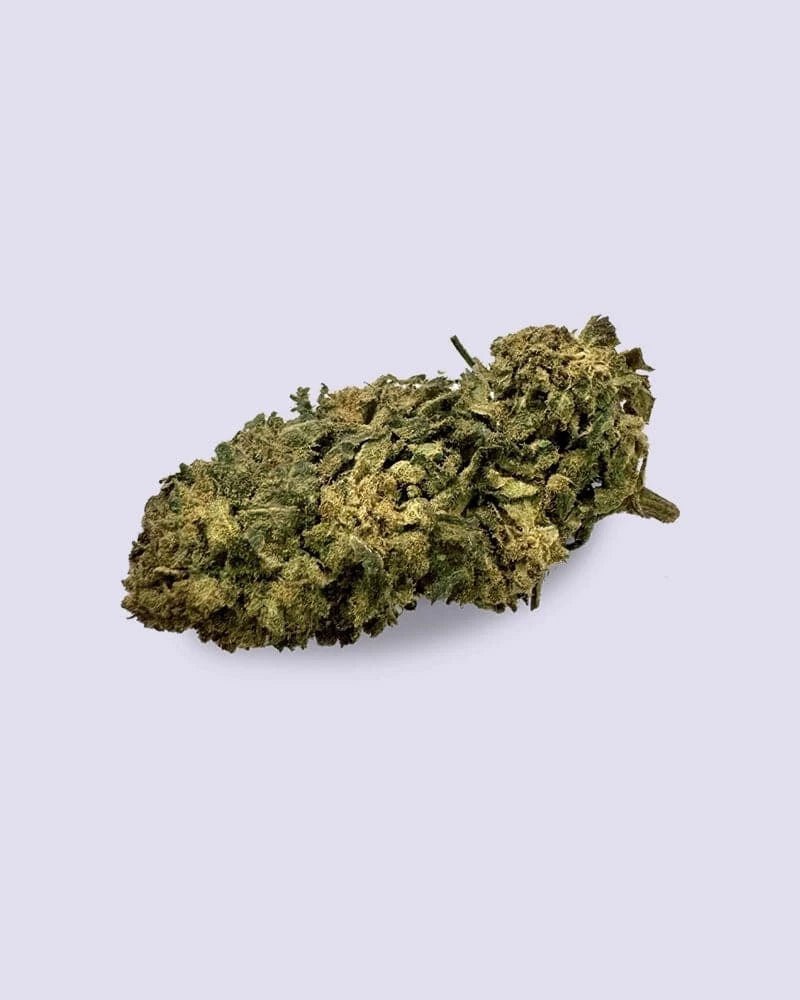
COAs are also essential for HHZ Flowers and HHZ Hash – for these products, heavy metal and pesticide screening is even more important, since hemp plants can accumulate contaminants from the soil.
Frequently asked questions about the COA
Does every Vape shop have to provide a COA?
In Germany, there’s no legal requirement to publish COAs for all product types. But: a provider who doesn’t show lab reports can’t back up their quality promises. That’s a clear quality marker – and a good reason to only buy from transparent shops.
Can I check a COA myself?
Yes. Many labs put QR codes on their reports so you can verify the document directly with the lab. If the report is available online and the data matches, it’s authentic.
What does “ND” mean in the COA?
ND stands for “Not Detected” – the substance tested for wasn’t found. That’s the result you want for contaminants like pesticides or heavy metals.
Does a COA apply to all batches?
No. A COA always refers to a specific batch. Ideally, the batch number is listed on the product packaging and matches the number in the COA. Well-organized shops update their lab reports with every new batch.
Do I really need the COA – or is the shop’s good reputation enough?
A good reputation comes from being transparent. The COA is proof that quality promises aren’t just empty words. It never hurts to take a quick look – and it really only takes two minutes if you know what to look for.
Conclusion
A COA isn’t just bureaucratic paperwork – it’s the most important quality document you get when buying a cannabinoid product. If you know how to read it, you’ll make more informed, safer choices and rarely pick the wrong product. The most important points: current date, well-known independent lab, complete safety panel, THC under 0.2% in the final product, and matching batch numbers on the packaging and report.
If you go for lab-tested products from the start, you don’t have to worry about these questions. Our entire range – from HHZ Vapes to Superior Blend Vapes and HHZ Flowers – is tested by independent third-party labs. The COAs are linked on the respective product pages.